Computer Vision — Complete 360° Master Guide (How Machines See & Understand the World)
📚 Topics & Subtopics Covered
- What computer vision actually means
- Why visual understanding is difficult for machines
- Evolution of computer vision (traditional → deep learning)
- Step-by-step computer vision pipeline
- Image representation (pixels, channels, features)
- Core tasks (classification, detection, segmentation)
- Deep learning in vision (CNNs and beyond)
- Real-world systems and applications
- Advantages, limitations, and challenges
- Business opportunities and future scope
🌍 Introduction
Humans rely heavily on vision. We can look at an image and instantly recognize objects, understand scenes, detect emotions, and even predict what might happen next. For us, this process feels effortless.
For machines, however, vision is not natural at all.
An image, for a computer, is nothing more than a grid of numbers. Each pixel has a value, and without interpretation, those numbers mean nothing.
Computer Vision is the field of AI that tries to solve this problem. It enables machines to interpret and understand visual information in a way that is useful and meaningful.
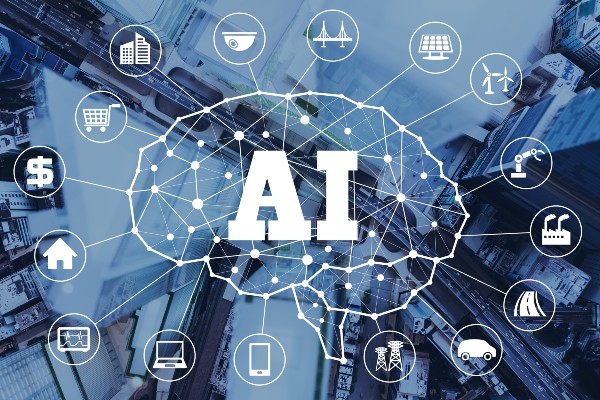
From facial recognition to self-driving cars, from medical imaging to security systems, computer vision is transforming industries.
🧠 What Computer Vision Actually Means
It is the ability of machines to extract information from images or videos and make decisions based on that information.
Also, It involves identifying patterns, recognizing objects, understanding scenes, and sometimes even predicting actions.
And it is not just about seeing, it is about understanding what is being seen.
🤯 Why Vision Is Difficult for Machines
At first glance, recognizing objects may seem simple. But for a machine, it is extremely complex.
An object can look different depending on lighting, angle, size, or background. A cat in one image may look very different from a cat in another image.
Humans can easily generalize, but machines need to learn this ability from data.
Another challenge is that images contain a huge amount of information. Processing this efficiently is difficult.
This is why computer vision requires advanced techniques and large datasets.
🔄 Evolution
Early computer vision systems were rule-based. Engineers manually defined features like edges, corners, and shapes.
These systems worked in controlled environments but failed in real-world scenarios.
Later, machine learning improved performance by learning patterns from data.
The real breakthrough came with deep learning, especially Convolutional Neural Networks.
These models automatically learn features from images, making them far more powerful.
Today, deep learning dominates computer vision.
⚙️ Computer Vision Pipeline
It follows a structured process.
It starts with image acquisition, where images or videos are captured.
Next comes preprocessing, where images are cleaned, resized, and normalized.
Then features are extracted. In deep learning, this is done automatically by neural networks.
After that, models analyze the image and make predictions.
Finally, results are interpreted and used in applications.
🔍 Understanding Images (Deep Intuition)
An image is made up of pixels.
Each pixel has a value representing intensity or color.
In color images, there are multiple channels, such as red, green, and blue.
At a basic level, this is just numerical data. But patterns in these numbers represent shapes, textures, and objects.
Deep learning models learn to identify these patterns.
🧩 Core Tasks in Computer Vision
Computer vision includes several important tasks.
Image classification involves identifying what is present in an image.
Object detection goes further by locating objects within the image.
Image segmentation divides the image into regions for detailed understanding.
These tasks increase in complexity and provide deeper insights.
⚡ Deep Learning in Computer Vision
Deep learning has transformed computer vision.
Convolutional Neural Networks are the backbone of modern vision systems.
They use filters to detect patterns and gradually build understanding.
At lower layers, they detect simple features like edges.
At deeper layers, they detect complex structures like faces or objects.
This hierarchical learning makes them highly effective.
🌐 Real-World Applications
It is being widely used in today’s almost every technology.
Self-driving systems developed by Tesla rely on vision to understand roads and surroundings.
Social media platforms use it for facial recognition and content moderation.
Healthcare systems use it for analyzing medical images.
Security systems use it for surveillance and threat detection.
Retail stores use it for inventory management and customer analysis.
⚖️ Advantages
Computer vision automates visual tasks.
It improves accuracy and efficiency.
Not only this, It can process large amounts of visual data quickly.
It enables new applications that were not possible before.
⚠️ Limitations
- requires large datasets.
- is sensitive to variations in data.
- can make mistakes in complex scenarios.
There are privacy concerns, especially in surveillance.
💡 Business Opportunities
Computer vision offers many opportunities.
You can build:
- security and surveillance systems
- healthcare diagnostic tools
- retail analytics platforms
- autonomous systems
- image-based search tools
It is one of the most impactful areas of AI.
🧠 Strategic Insight
Its power lies in combining it with other technologies.
For example, combining vision with NLP creates systems that can both see and understand language.
Another important insight is that data quality matters more than model complexity.
🎯 Final Understanding
Computer vision enables machines to understand the visual world.
It transforms images from raw data into meaningful information.
As technology advances, computer vision will become even more powerful and integrated into everyday life.
View more like this- MY ELYSIAN WORLD
Leave a Reply